Why Conversion Tracking and User Behavior Analytics Matter for Business Growth
Understanding Website Conversions with Tag Management and User Behavior Analytics
Many businesses invest in digital marketing expecting traffic to turn into leads, calls, or sales. What often gets overlooked is whether the website is actually measuring the actions that lead to those outcomes.
A modern website should function as more than a digital brochure. It should operate as a measurement system that captures how visitors interact with the site and identifies what leads them to convert. Without that visibility, marketing decisions become guesswork.
One of the most effective ways to build this measurement layer is by combining a tag management system like Google Tag Manager with behavioral analytics tools such as Microsoft Clarity.
Together, these tools provide both the quantitative data and behavioral insights needed to improve how a website performs.
The gap between traffic and conversions
A common mistake in digital marketing is focusing entirely on traffic numbers. Businesses celebrate increases in visitors, ad clicks, or impressions while overlooking whether those visitors are actually completing meaningful actions.
Metrics like pageviews or sessions only tell part of the story. What matters more is understanding whether visitors are taking the steps that move them closer to becoming customers.
That might include submitting a contact form, clicking a phone number, requesting a quote, scheduling an appointment, or completing a purchase.
When those actions are tracked correctly, a website becomes measurable. Instead of wondering whether marketing efforts are working, businesses can clearly see which channels, pages, and user behaviors contribute to real outcomes.
Why tag management matters
Websites often rely on multiple analytics and marketing tools. Advertising platforms, analytics platforms, and tracking pixels all need to collect information about user activity.
Managing these scripts directly inside a website’s code can quickly become complicated and difficult to maintain. This is where a system like Google Tag Manager becomes useful.
Tag management allows websites to deploy and manage tracking scripts from a centralized interface rather than modifying the site’s code every time a new event needs to be tracked.
More importantly, it allows businesses to track interactions that matter, such as:
- Form submissions
- Clicks on important buttons
- Phone number interactions
- Page engagement signals
- Custom events related to lead generation
When structured properly, these tracked events can feed data into analytics platforms and advertising systems. Campaigns can then optimize toward actions that produce actual business value rather than just traffic.
Seeing how users actually experience a website
Numbers alone do not explain why users behave a certain way. Conversion rates can indicate that a page is underperforming, but they rarely reveal what visitors are experiencing when they interact with the site.
This is where behavioral analytics tools like Microsoft Clarity become valuable.
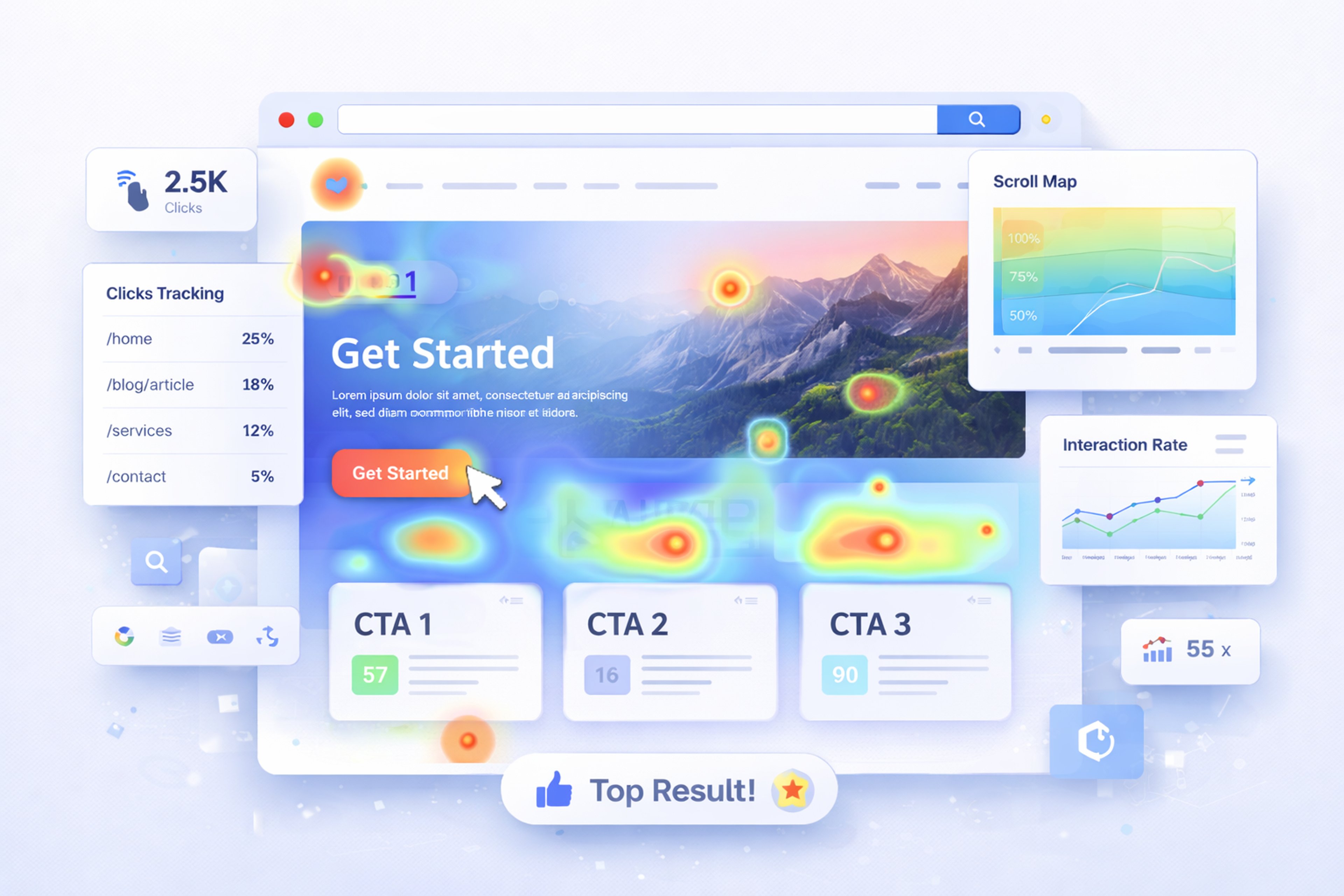
Instead of only looking at reports and charts, behavioral analytics allows businesses to observe patterns in how users navigate the website. Session recordings, heatmaps, and interaction data provide visibility into the real experience visitors have when browsing.
These insights often reveal small friction points that traditional analytics cannot detect. A confusing form layout, an unclear call-to-action, or a design element that distracts users can quietly reduce conversion rates without anyone realizing it.
By observing user behavior directly, businesses can identify opportunities to simplify pages, clarify messaging, and remove obstacles that prevent visitors from taking action.
Turning websites into learning systems
When tracking infrastructure and behavioral analytics work together, a website becomes something more powerful than a static marketing asset.
It becomes a feedback system.
Traffic enters the website from search engines, paid advertising, or referrals. User interactions are captured and analyzed. Patterns begin to emerge about how visitors engage with pages, which actions they take, and where they lose interest.
These insights make it possible to continuously refine the site experience. Layout adjustments, messaging improvements, and usability changes can all be tested and measured over time.
Small improvements in conversion performance often compound quickly. Even modest increases in conversion rate can significantly increase the number of leads or customers generated from the same amount of traffic.
Why measurement is becoming essential
As competition online increases, businesses that rely purely on surface-level metrics will struggle to keep pace with companies that understand their data.
Knowing how many visitors reached a website is useful. Knowing what those visitors did, why they behaved a certain way, and how the experience can be improved is far more valuable.
Tools like Google Tag Manager and Microsoft Clarity make it possible to build this deeper layer of understanding.
When websites are designed around measurable interactions and behavioral insights, they become platforms for continuous improvement rather than static marketing pages.
Over time, that difference has a direct impact on how effectively a business turns online traffic into real growth.